
Last updated November 16, 2026
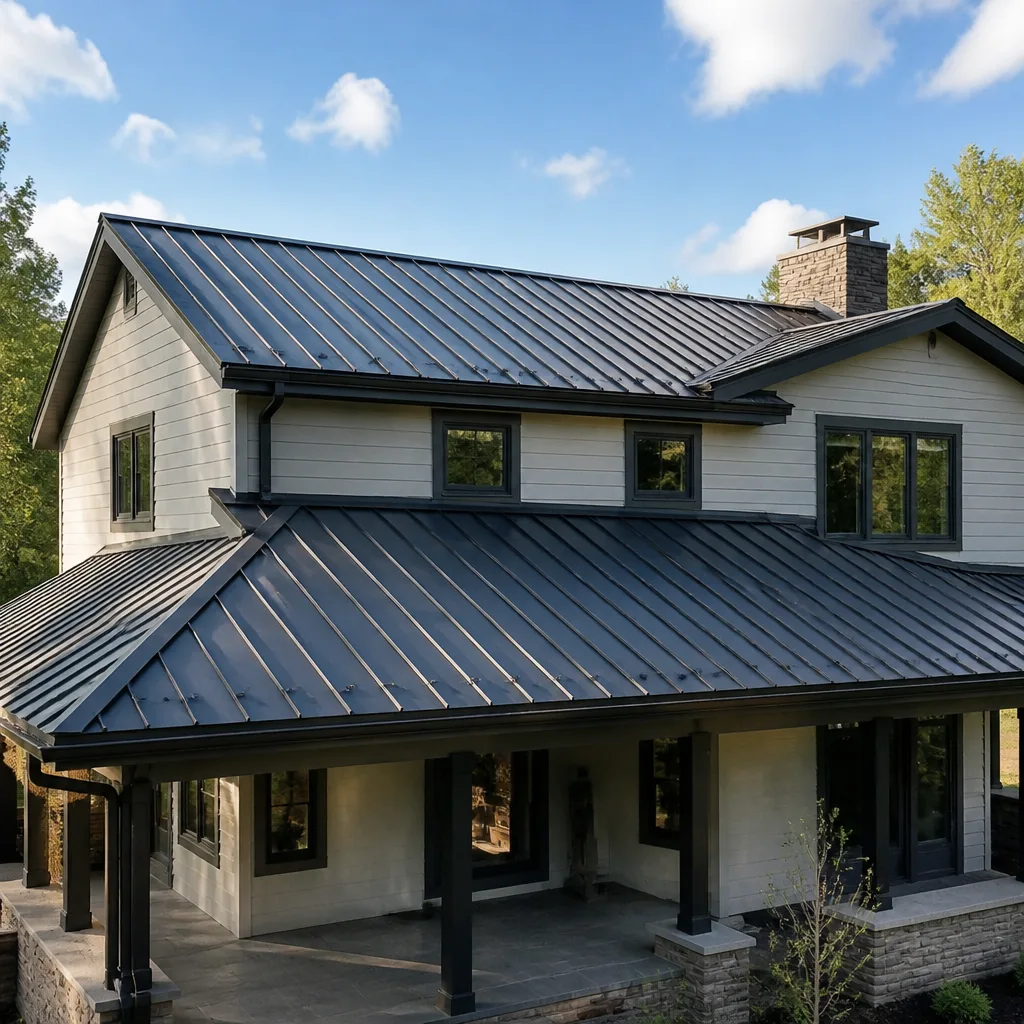 Metal roofing
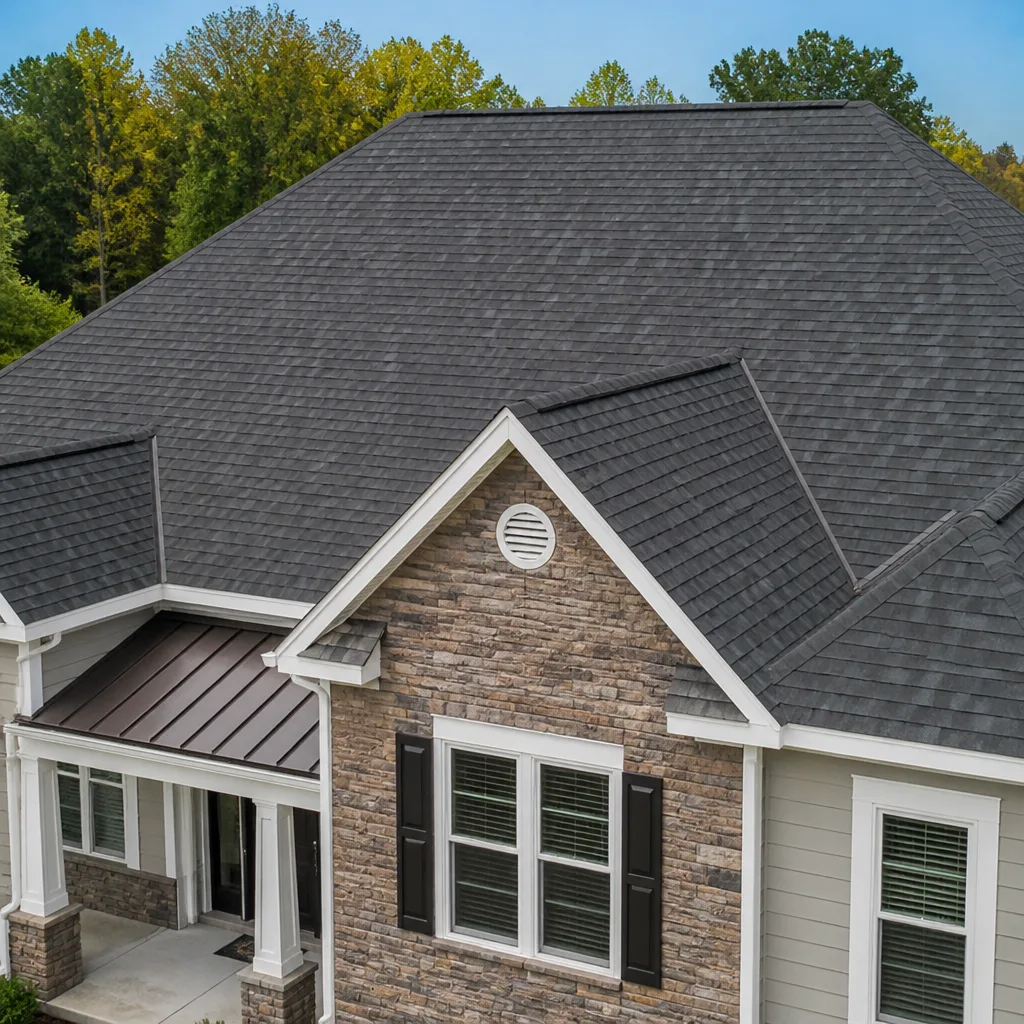 Architectural shingles
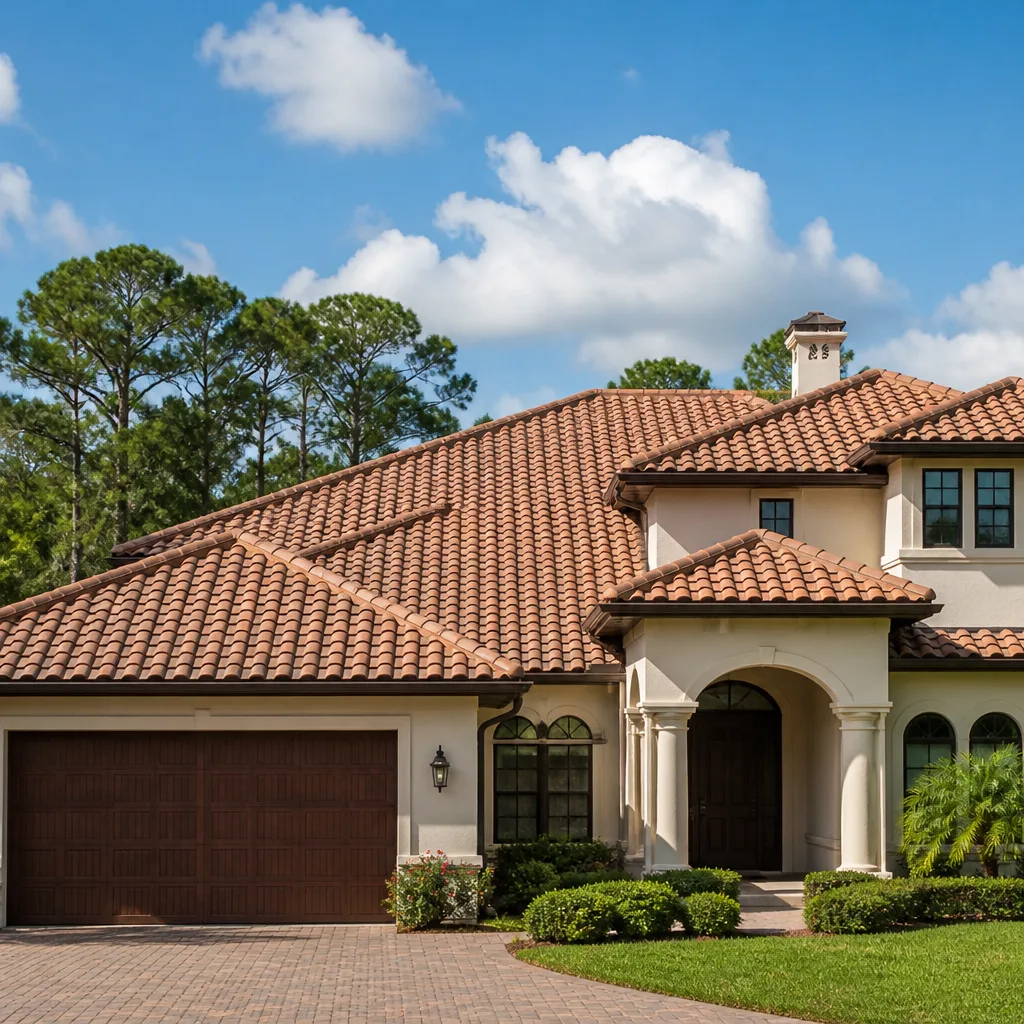 Tile roofing
 GAF
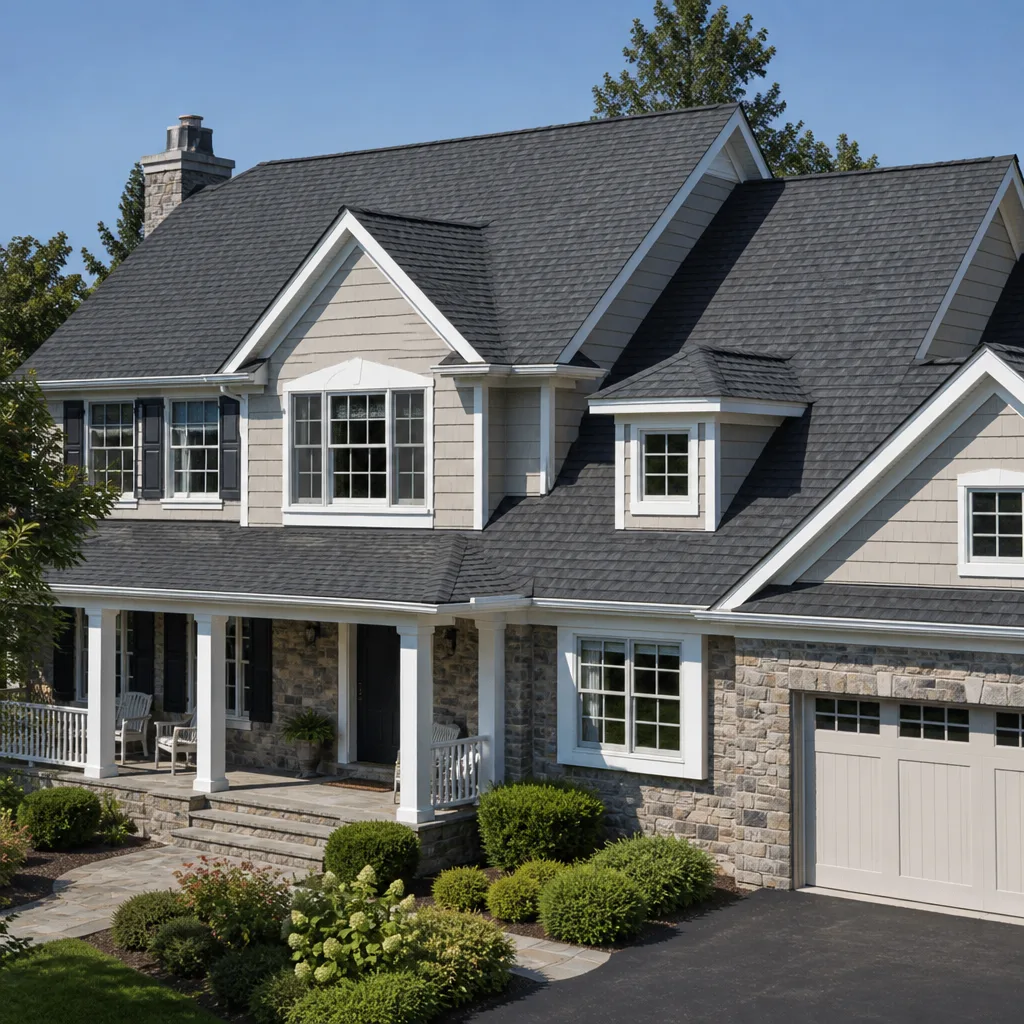 Owens Corning
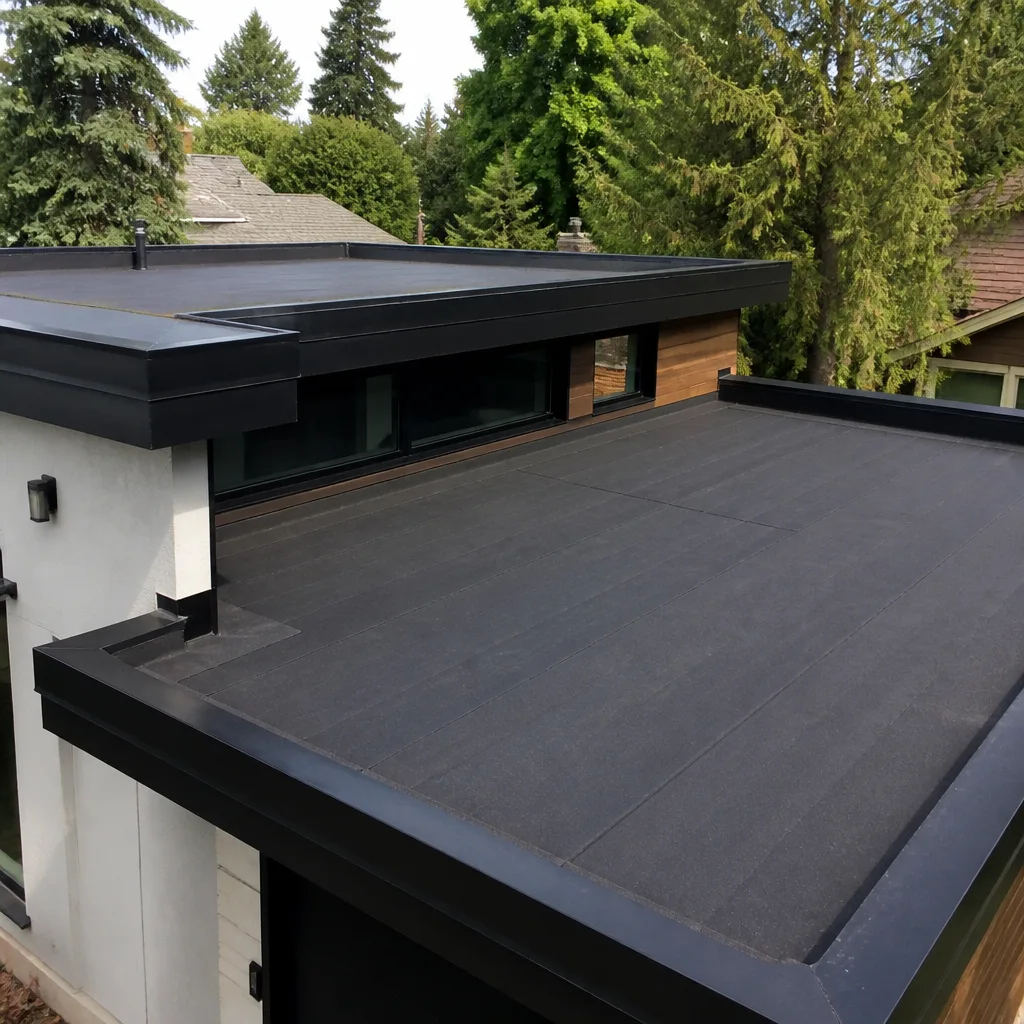 Flat & low-slope
Free roof inspection with deck photos before we talk money - GAF and Owens Corning certified installation
How to Hire a Roofing Contractor in Whitney: A Step-by-Step Guide
Two quotes for the same roof can land thousands of dollars apart and still describe two completely different jobs. One includes new underlayment and decking repair; the other silently skips both. Most homeowners only discover that gap after crews are on the roof and a line item turns into a change order. The fix is simple, if uncommon: stop shopping for the lowest number and start comparing scope, line by line. This guide walks Whitney homeowners through what a real roofing contract should contain, how to check a Nevada contractor’s license and insurance, what manufacturer certification actually buys you, and how workmanship and material warranties differ. By the end, you’ll be able to read a bid like someone who’s done this before.
Quick Answer
Hire a roofing contractor in Whitney by verifying their Nevada contractor license and insurance certificates first, then comparing at least three written, line-item bids for scope rather than price alone. A legitimate contract should name the underlayment type, decking replacement allowance, drip edge, flashing, and disposal costs. Choose the bidder whose quote is complete, whose manufacturer certification matches the brand being installed, and whose workmanship warranty is in writing, not the one with the lowest headline number.
Styles & brands we work with
- Architectural shingles
- Metal roofing
- Tile roofing
- GAF
- Owens Corning
- Flat & low-slope
Table of Contents
- Start With Verification, Not Price
- What a Real Roofing Contract Must Specify
- How to Verify a Nevada Roofing License and Insurance
- Spotting Storm-Chasers in the Whitney Area
- Why Manufacturer Certification Matters for Your Warranty
- Reading Warranty Documents: Workmanship vs. Material
- How to Compare Bids Side by Side
- Common Mistakes to Avoid
Start With Verification, Not Price
Before you read a single dollar figure, confirm the contractor is licensed, insured, and operating as a roofing specialist. In Whitney, that means a Nevada State Contractors Board license in the appropriate classification, general liability coverage, and workers’ compensation for anyone on your roof. Ask for documents, not verbal assurances. A contractor who hesitates on any of these is telling you something important.
The reason to lead with verification is that price is easy to fake. A bid can look great and still come from an unlicensed operator who won’t be around when a leak reappears. Licensing and insurance are the two checks that separate a business from a stranger with a ladder. Neither takes long.
While you’re at it, notice whether roofing is the contractor’s only trade. A roofing specialist concentrates on roofs. A general contractor stretched across plumbing, HVAC, and siding may treat your roof as a sidelight. We’ve built our whole business around roofing as the only trade we handle, and it changes how carefully a roof gets read.
One more thing worth knowing: inspection comes before any recommendation. If a contractor jumps straight to replacement without walking the roof, climbing into the attic, and documenting what they found, they’re guessing. A proper assessment is the honest starting point, and Roofing Whitney treats it as exactly that.
What a Real Roofing Contract Must Specify
A roofing contract that says “tear-off and install new shingles” isn’t a contract. It’s a headline. The details beneath it determine whether the job protects your home for the next quarter century or fails at the first hard monsoon. In Whitney, where summer heat and seasonal storms test every layer of a roof system, those details matter more than the shingle color.
Here’s the line-item checklist we walk homeowners through when reviewing a bid. If any of these are missing or vague, ask for them in writing before signing:
- Decking replacement allowance. The contract should state a per-sheet price for replacing rotted or damaged sheathing and how many sheets are included before that price kicks in. Without it, decking becomes an open-ended add-on.
- Underlayment type. Synthetic underlayment, felt, and peel-and-stick differ in cost and performance. The contract should name the product and where it’s applied, especially along valleys and eaves.
- Drip edge. Metal drip edge at the eaves and rakes directs water away from fascia. It’s cheap and often omitted from low bids.
- Flashing details. Chimney, skylight, and wall flashing should be described by material and method, including whether existing flashing is reused or replaced.
- Ice and water shield placement. Where the membrane goes, and how far up the roof, should be specified.
- Ventilation changes. Ridge vent, soffit vent, or both, with model numbers if the contractor is changing the system.
- Disposal and dumpster. Removal and haul-away of old materials, plus the cost of the dumpster, should be a line item, not an assumption.
- Permits and inspection fees. Whitney and the surrounding Clark County area require permits for reroofing. The contract should state who pulls it and who pays.
- Payment schedule. Deposits, progress payments, and final payment tied to inspection. Never pay in full upfront.
- Written warranty terms. Both the workmanship warranty and the manufacturer material warranty, attached or quoted verbatim.
When we put together a roof repair or roof replacement quote, each of these appears as its own line. That’s not paperwork for its own sake. It’s how you compare two bids without guessing.
How to Verify a Nevada Roofing License and Insurance
Nevada requires roofing contractors to hold a state license through the Nevada State Contractors Board. Verification is public and free: look up the license number on the board’s website, confirm the classification matches roofing work, and check that the license is active with no disciplinary actions on file. Do this before the contractor leaves your driveway.
Insurance is the second half, and it’s where homeowners get tripped up. A certificate of insurance isn’t just proof that coverage exists. It should show:
- General liability coverage with the policyholder’s legal business name matching the contractor you’re hiring.
- Workers’ compensation coverage for employees who will be on your property. If the contractor uses subcontractors, ask whether those subs carry their own workers’ comp.
- Policy effective and expiration dates that cover your project window. A certificate that expired last month protects no one.
- Your address listed as the project location on the certificate, when the insurer supports it.
- Certificate holder information showing you, the homeowner, as the party being notified of cancellation.
Ask the contractor to have their insurer send the certificate directly to you. A PDF the contractor forwards can be edited; one that comes from the insurer is harder to fake. If a bidder can’t produce both general liability and workers’ comp, stop.
For Whitney homeowners, the local detail worth noting is that Clark County permits require a licensed contractor of record. If the crew installing your roof isn’t working under a valid license, the permit can’t legally be issued, and that’s a problem sitting on your property record for years. We pull permits and pass inspections as part of every replacement, and we’ll show you the paperwork.
Spotting Storm-Chasers in the Whitney Area
After a significant weather event, contractors from out of state sometimes appear in Nevada neighborhoods offering fast inspections and faster signatures. Some are legitimate; many aren’t. The pattern is consistent enough that Whitney homeowners should know it. Storm-chasers typically knock on doors within days of a storm, offer to “handle your insurance claim for you,” ask for a large upfront deposit, and disappear once the check clears.
Red flags to watch for:
- No local verifiable license. If they can’t produce a Nevada State Contractors Board license number immediately, walk away.
- Pressure to sign “today.” Legitimate roofing work doesn’t require a same-hour decision. If a contractor claims a discount expires by nightfall, that’s a sales tactic, not an emergency.
- Offers to cover your deductible. Waiving or “absorbing” an insurance deductible is insurance fraud in most states, and Nevada is no exception. Treat it as a hard stop.
- No physical business presence. Ask for a business address and phone number you can call later. A post office box and a cell phone are not a contractor.
- Door-to-door canvassing as the only contact method. If the only way to reach them is the phone number on a flyer, verify everything before signing.
- No written contract, or a contract you can’t take home. You’re entitled to review any contract before signing. Anyone who won’t let you is hiding something.
- Out-of-state license plates and no local references. Neither is disqualifying on its own, but together they’re a warning sign.
In our experience, the best protection is a written, line-item contract from a contractor you’ve verified and whose workmanship warranty travels with the roof, not the salesperson. When hail or wind moves through Whitney, the honest contractors are the ones still answering their phones a year later.
Why Manufacturer Certification Matters for Your Warranty
Manufacturer certification isn’t a marketing badge. It’s a formal agreement between the roofing manufacturer and the installer, and it often determines whether you qualify for the enhanced warranty tiers the manufacturer offers. If the contractor installing your GAF, CertainTeed, or IKO system isn’t certified for that specific brand, your warranty may default to the basic tier, even though the materials are the same.
Certification varies by brand. A contractor certified for one manufacturer isn’t automatically certified for another. That’s a detail worth checking, because the brand named on your contract should match the brand the installer is certified to work with. We work with seven major manufacturers, including IKO, Atlas, and Tamko, and we’ll tell you which certifications apply to the product we’re recommending. You pick the brand that fits your home and budget; we work with all of them.
This is also where multi-brand access earns its keep. A contractor with a single-brand arrangement will steer you toward that brand regardless of your roof’s needs. A contractor working across competing product lines can match the material to the roof and the budget. When you get quotes, ask which manufacturer certifications the bidder holds and which warranty tier the proposed product qualifies for.
For homeowners thinking about the long game, brand-agnostic advice protects the whole roof’s full lifespan. There’s no pressure to install a product because of a rebate program. The recommendation reflects the roof.
Reading Warranty Documents: Workmanship vs. Material
The two warranties on a roofing job protect different things, and homeowners often conflate them. A workmanship warranty covers installation errors. A manufacturer material warranty covers defects in the shingles or components themselves. Both matter; neither replaces the other.
Workmanship warranty. This comes from the contractor, not the manufacturer. It should be in writing, state what it covers (typically installation and flashing failures), how long it lasts, whether it’s transferable to a future buyer, and what the remedy is (repair or replacement). Ask for a sample before signing. A verbal “we stand behind our work” isn’t a warranty.
Manufacturer material warranty. This comes from the manufacturer and typically covers shingle defects such as premature granule loss, cracking, or manufacturing flaws. Its length depends on the product line and whether the contractor is certified, which is why the certification question matters here. Read the exclusions carefully. Wind and impact damage usually fall under homeowner insurance, not the material warranty.
When comparing quotes, put both warranty terms side by side. A bid that offers a stronger workmanship warranty may be worth more than a slightly cheaper bid with a thin one. And a bid that quotes a premium shingle but installs it under a basic warranty tier is quietly reducing the value of what you bought.
If a warranty document is filled with exclusions, ask the contractor to walk you through each one. We’ll do that in writing, so you know exactly what’s covered and for how long.
How to Compare Bids Side by Side
Comparing bids is not a matter of reading the totals. It’s a matter of matching line for line. The right process is methodical, and it’s the single most useful habit in this guide.
- Lay the bids side by side in a spreadsheet. Create a row for each line item from the contract checklist. Put each bidder’s specification in its own column.
- Flag every blank cell. A missing underlayment spec or omitted drip edge isn’t necessarily a cheaper job; it may be an incomplete bid that will grow.
- Normalize for decking allowance. If one bid allows for twenty sheets of replacement decking and another allows for zero, the second bid will balloon once work starts.
- Check the manufacturer and certification match. The brand named on the contract should align with the installer’s certification.
- Read the warranty section for every bid. Note duration, transferability, and whether it covers labor, materials, or both.
- Confirm who pulls permits and who pays the fee. It should be the licensed contractor of record.
- Ask what changes the price. A written answer to this question, in the contract, is the difference between a fixed quote and an open tab.
When someone in Whitney asks how to hire a roofing contractor without getting burned, this is the answer: compare scope, ask the same questions of every bidder, and require the written answer. A narrow gap between the highest and lowest bid usually means the bids are honest. A wide gap usually means somebody left something out.
Common Mistakes to Avoid
- Choosing the lowest bid without comparing scope. A bid that’s four thousand dollars cheaper often is four thousand dollars thinner in materials and labor. Line it up against the others before deciding.
- Accepting a verbal warranty. Nevada homeowners are protected by written contracts, not by a contractor’s promise on the porch. Ask for the warranty document before signing.
- Skipping the license lookup. Verifying a Nevada State Contractors Board license takes a few minutes and can save you a six-figure cleanup. Do it for every bidder.
- Signing an insurance assignment or “we’ll handle your claim” agreement. These documents often funnel your claim settlement to the contractor. Keep control of the claim yourself.
- Paying a large deposit upfront. A deposit is normal; paying the majority of the job before material lands on site is not.
- Not asking about decking allowance. Whitney’s summer heat and monsoon-driven moisture can compromise wood sheathing, and the decking allowance is where that risk is priced.
- Ignoring the attic. A contractor who never looks inside the attic is missing ventilation and leak-path evidence. Ask whether the assessment included it.
See the difference
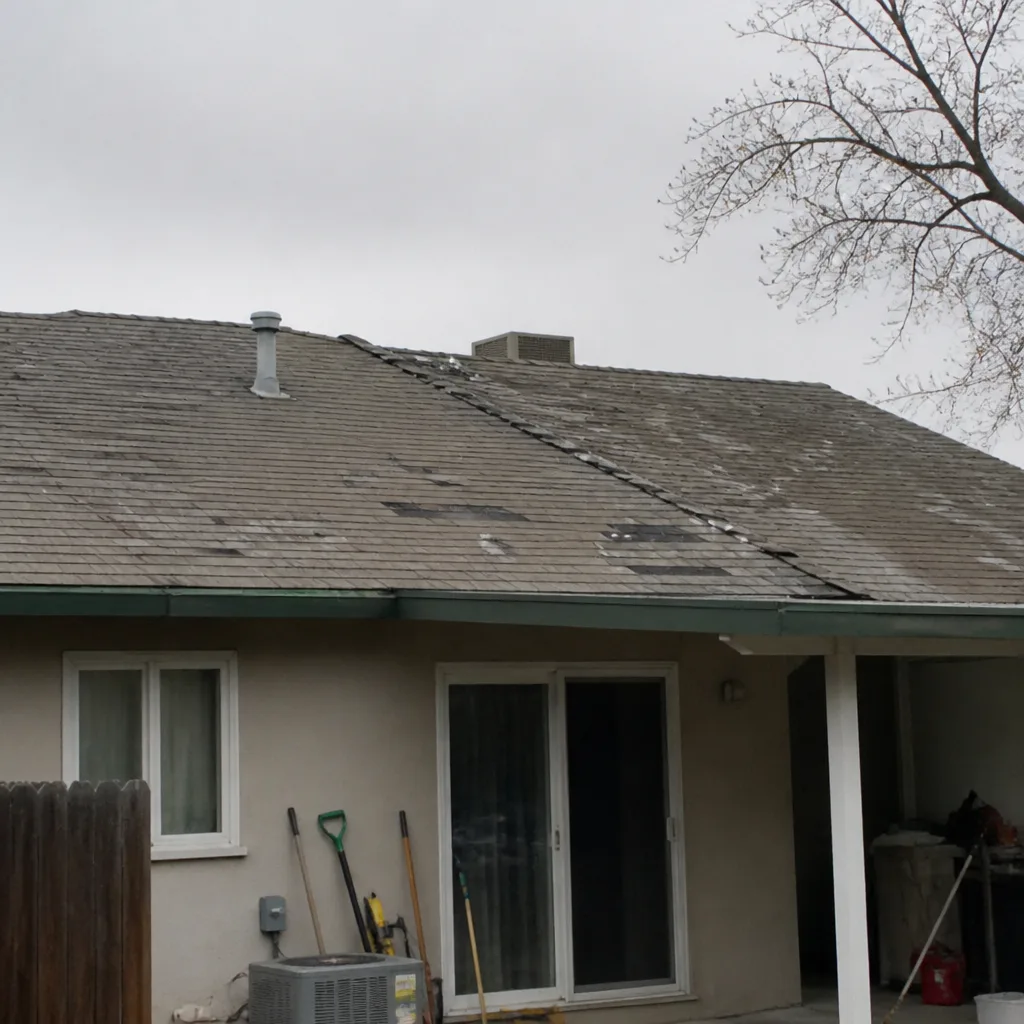 Before
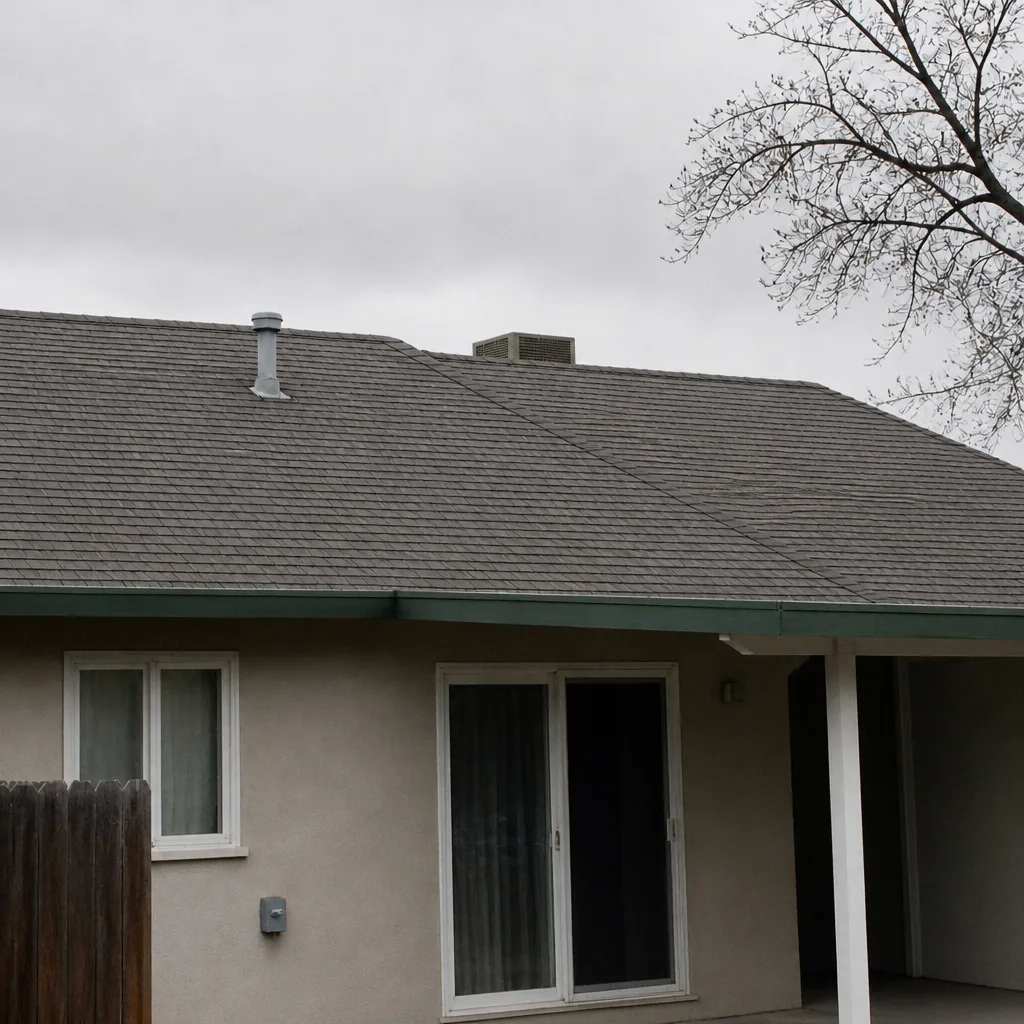 After
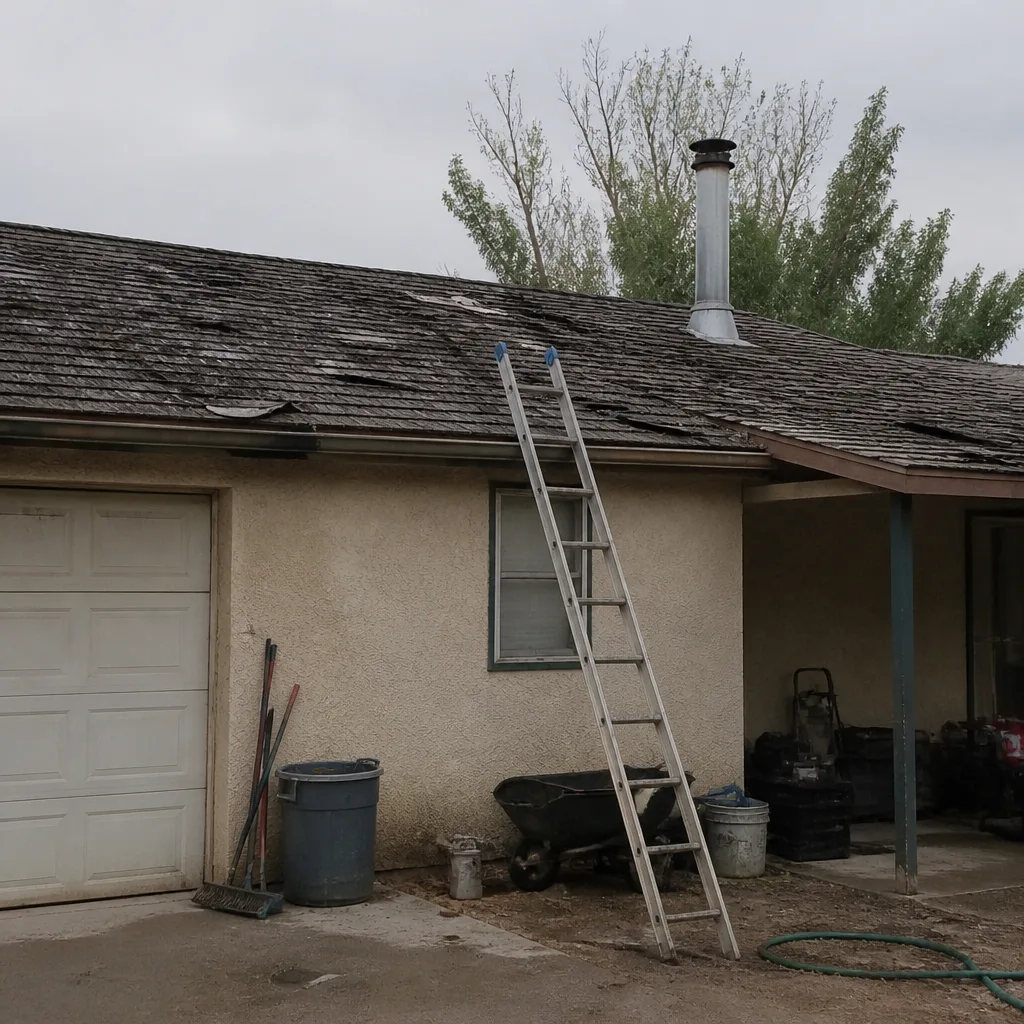 Before
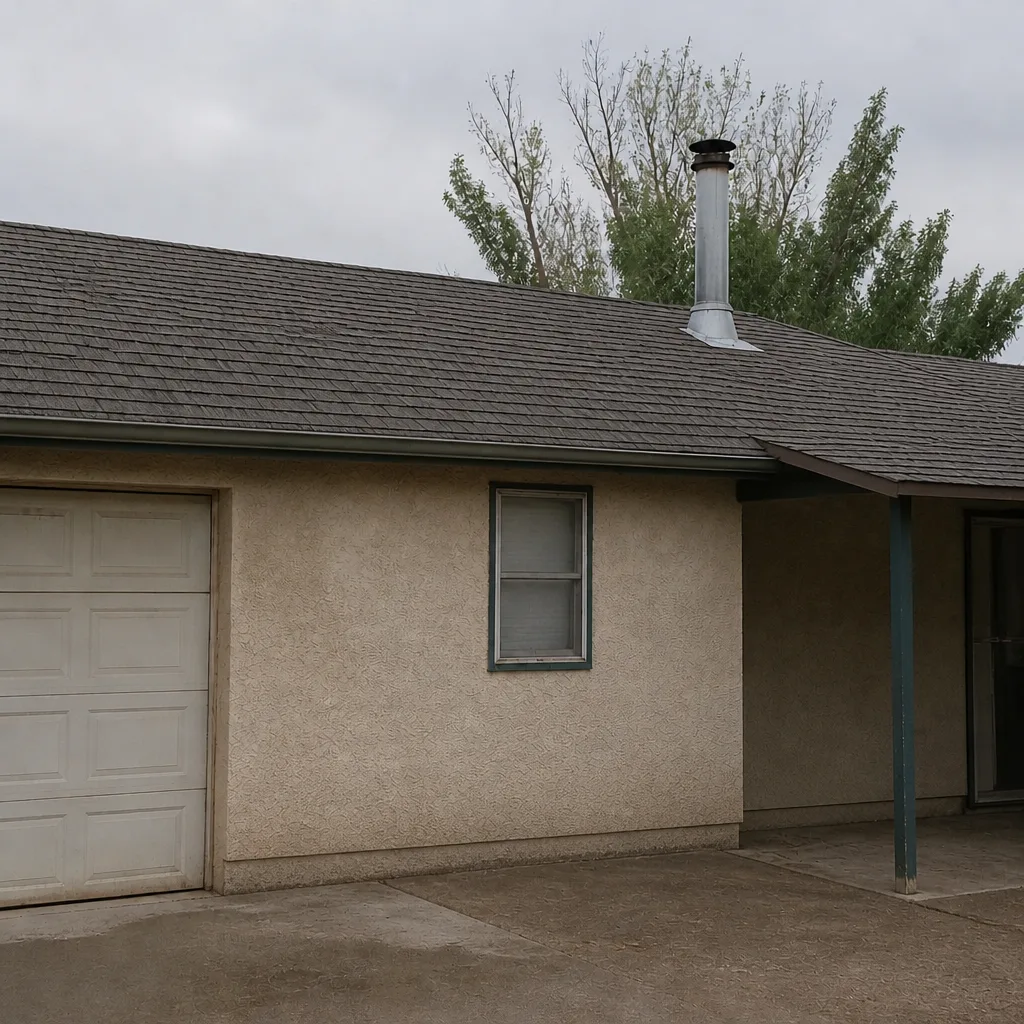 After
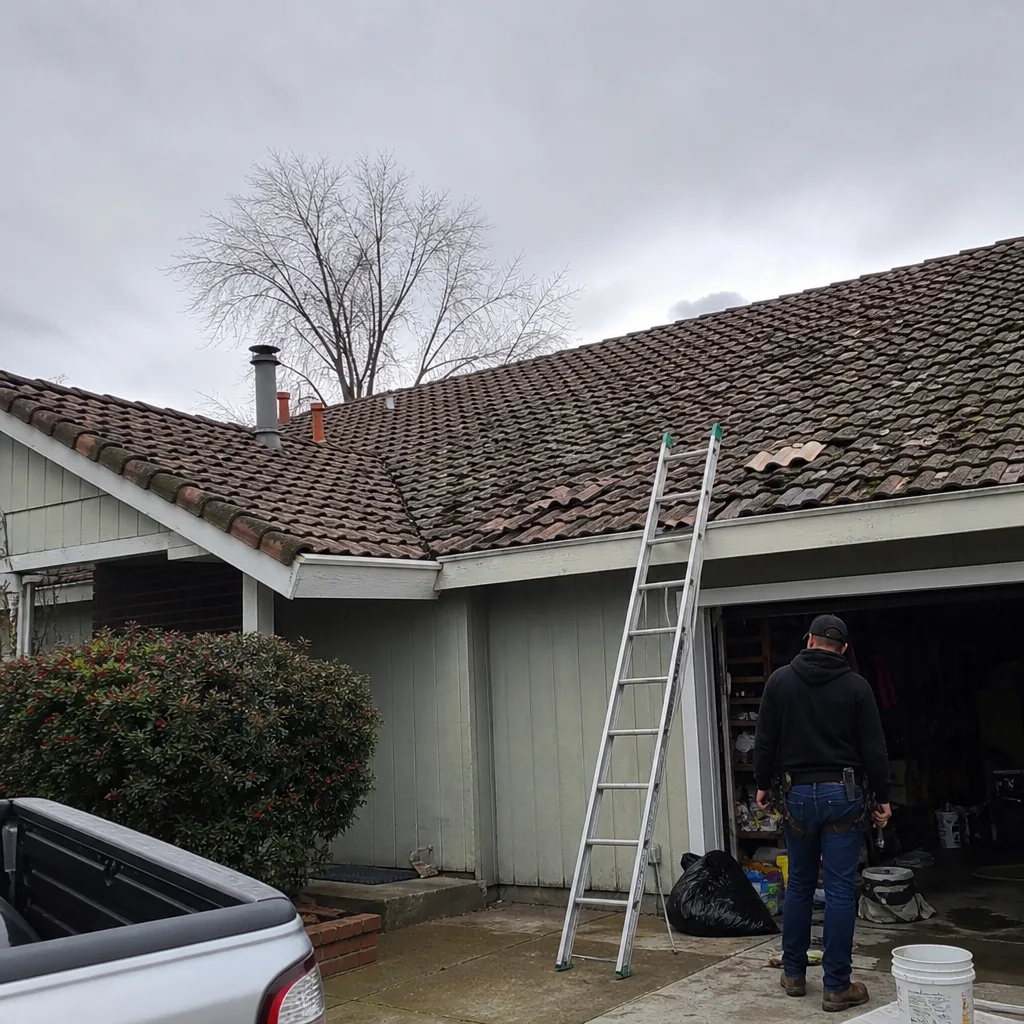 Before
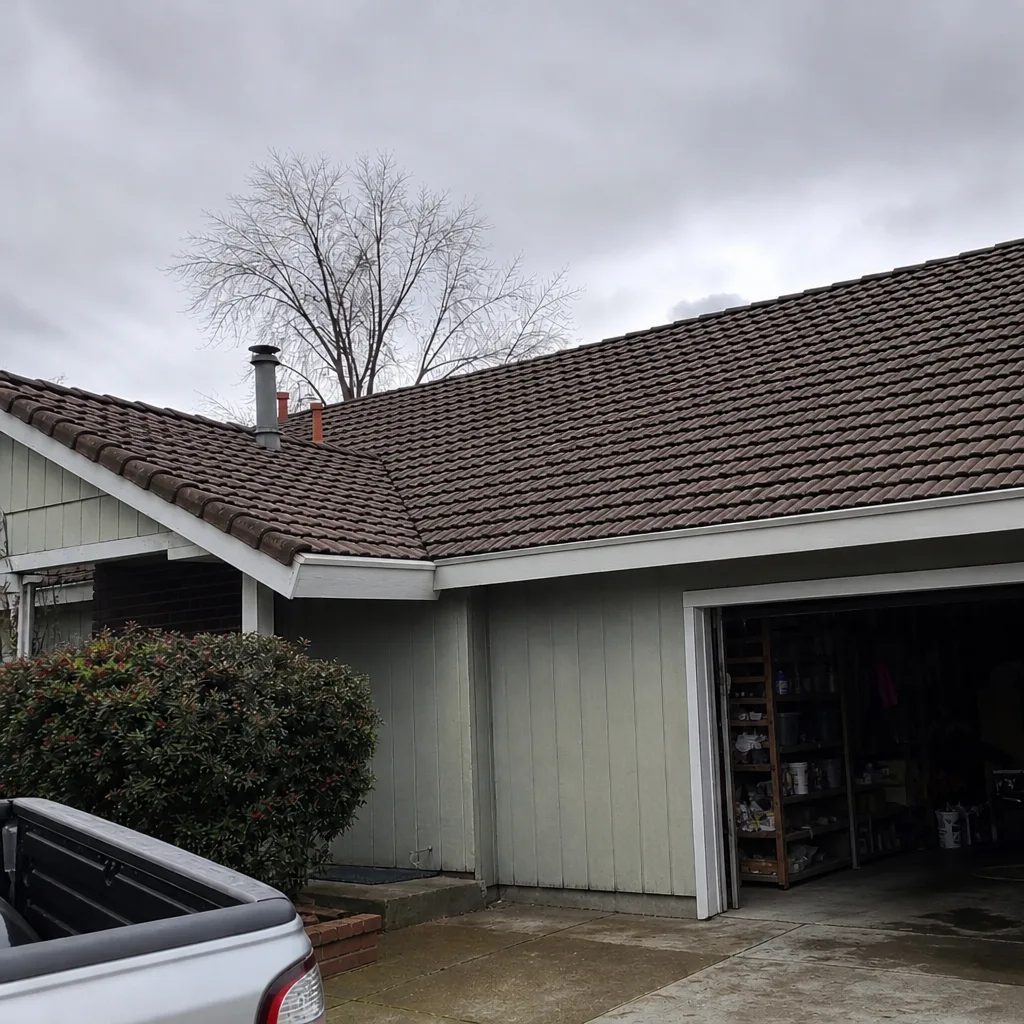 After
When to Call a Professional
Some roofing issues can wait a season. Some can’t. Call a professional if you notice a ceiling stain that grows after rain, granules collecting in gutters, shingles curling or missing, daylight visible through the attic sheathing, or a sagging roof deck. In Whitney’s climate, homes also see heat-related shingle aging and monsoon-driven wind damage, and either can open a small leak into a large repair if it goes unaddressed. Roofing is also inherently dangerous work; steep pitches, ladder heights, and hot afternoons make a do-it-yourself repair a genuine safety risk. If you’re not sure what you’re looking at, a standalone professional assessment is the honest next step. Know what your roof actually needs before spending a dollar. Roofing Whitney offers free estimates in Whitney – call (844) 320-5203.
Frequently Asked Questions
Roof repair costs in Whitney depend on the area affected, the material, and whether decking needs replacement, so an exact figure requires an inspection. Most repairs price out by the job based on a written estimate, not a flat rate. Call (844) 320-5203 for an exact quote – estimates are free.
Yes. Whitney-area reroofing generally requires a permit through Clark County, and the licensed contractor of record pulls it. Confirm who pulls the permit and who pays the fee in the written contract. If a bidder says permits aren’t necessary, that’s a red flag.
Look up the license number on the Nevada State Contractors Board website, confirm active status, and request a certificate of insurance sent directly from the insurer. Check that both general liability and workers’ comp are active and that the policyholder name matches the contractor you’re hiring.
The workmanship warranty covers installation errors and comes from the contractor. The manufacturer warranty covers material defects in the shingles and components. Both should be in writing, and the manufacturer warranty tier often depends on installer certification for that brand.
It shouldn’t if the contract specifies a decking allowance and a written process for changes. A legitimate bid names what’s included and what triggers an add-on. Any change should be documented and approved in writing before work continues. Call (844) 320-5203 for a written estimate that spells this out.
Storm-chasers typically appear door-to-door after weather events, can’t produce a local license, push for same-day signatures, and offer to cover your insurance deductible. A licensed contractor in Whitney will produce a state license number, allow you to review the contract, and never offer to pay your deductible.
The Bottom Line
Hiring a roofer in Whitney comes down to a few checks that most homeowners skip: verify the license and insurance, compare scopes line by line, and read the warranties in writing. The lowest bid rarely wins once you account for what it leaves out. Seven leading brands, one focused roofer means real product choice, and inspection-first thinking means no one upsells you into a replacement you don’t need. When you’re ready to see what your roof actually needs, we’re here to give you a straight read and a written estimate you can compare against any other bid. Roofing Whitney offers inspection, roof repair, and roof replacement as a single-trade specialist, and we treat every roof as a long-term asset, not a transactional sale. Our technicians have up to 9 years of experience. Call (844) 320-5203 for a free estimate. We answer 24/7. Fast dispatch from 7am to 7pm, Sunday through Friday.
Written by the team at Roofing Whitney.