
Last updated November 16, 2026
 Architectural shingles
 Metal roofing
 Tile roofing
 GAF
 Owens Corning
 Flat & low-slope
Free roof inspection with deck photos before we talk money - GAF and Owens Corning certified installation
Roof Repair Maintenance Checklist for Whitney Homeowners
Most Whitney homeowners think about their roof twice: when they buy the house and when a stain appears on the ceiling. That gap is where money gets lost. A roof doesn’t fail in a single storm. It fails slowly, through small openings that let in dust, heat, and the occasional hard rain, until one season the damage reaches the decking and a repair turns into a replacement.
The counterintuitive part is that the checklist most people follow is timed wrong. Generic advice says “inspect in spring and fall.” Whitney doesn’t work that way. The real threats here arrive in a sequence: brutal late-spring sun that bakes sealant and shingles, a concentrated monsoon window from July through September, then months of dry heat that quietly widen every crack the storms opened. This guide is built around that calendar, not a template borrowed from a wetter climate. By the end you’ll know what to check, when to check it, and which tasks are genuinely safe for you to handle versus which ones need a professional to do without putting your material warranty at risk.
Quick Answer
A roof maintenance checklist for Whitney should be timed to the desert calendar, not the standard spring-and-fall routine. Check flashing and sealant before the summer heat peaks in late spring, clear drains and scuppers before the July-to-September monsoon, and inspect for heat-driven cracking and granule loss once the rains end. Most of the work is visual and owner-safe; anything involving walking the full roof, resealing penetrations, or replacing damaged shingles should go to a professional. Done on schedule, these checks add years to a roof’s life and catch small repairs before they become large ones.
Styles & brands we work with
- Architectural shingles
- Metal roofing
- Tile roofing
- GAF
- Owens Corning
- Flat & low-slope
Table of Contents
- Why Timing Matters More Than the Checklist Itself in Whitney
- Pre-Summer: UV Preparation Before the Heat Peaks
- Monsoon Season: The Drainage Window That Decides Your Year
- Post-Summer: The Heat Damage Inspection
- Flashing Around HVAC Units and Swamp Coolers
- Granule Loss: Normal Wear or Early Failure?
- Gutters and Scuppers for Infrequent but Intense Rain
- Owner-Safe Tasks vs. Professional-Only Work
Why Timing Matters More Than the Checklist Itself in Whitney
Ask ten homeowners what a roof maintenance checklist looks like and you’ll get ten variations of the same list: clean the gutters, check the shingles, look for leaks. The items are fine. The problem is the timing. A checklist performed at the wrong moment catches problems after they’ve already done their damage, or misses them because the conditions that reveal the problem haven’t arrived yet.
Whitney sits in a desert valley climate with a very specific profile. Long stretches of dry heat, intense sun exposure at this elevation, and a short but violent monsoon window. Each of those conditions stresses a roof differently, and each one leaves a signature you can only read if you look at the right time.
Consider what happens across a single year. In late spring, shingle sealant strips soften under the sun and get baked firm again. That cycle is the one that eventually lets wind lift a tab. Before the monsoon, the critical question is drainage: will the water that arrives in a concentrated burst find a path off the roof, or will it pool against a penetration and find its way in? After the summer, the question changes completely. Now you’re reading heat damage: hairline cracks in sealant, curling shingles, and the granule piles that tell you how much surface the sun has actually stripped.
Miss the pre-monsoon drainage check and you discover the problem during the rain, when it’s too late to do anything but watch. Miss the post-summer inspection and a small heat crack grows into a leak that only shows up months later. The checklist isn’t the hard part. The calendar is. Once you align the two, roof maintenance in Whitney stops being a chore and becomes a predictable, cheap routine.
The reason this matters is scale. Small maintenance issues compound. A sealed flashing joint that costs almost nothing to refresh today is the same joint that, left alone through several seasons, allows moisture into the deck and turns into a repair with real cost attached. The whole point of a maintenance checklist is to catch things at the cheap end of that curve.
Pre-Summer: UV Preparation Before the Heat Peaks
The pre-summer window is your UV prep phase. By the time the intense heat arrives, you want every sealant joint, flashing edge, and vulnerable penetration already sound. Think of it as putting your roof’s defense layer in order before the sun starts testing it daily.
Here’s what the pre-summer pass involves:
- Walk the perimeter at ground level. Look up at the roofline from each side of the house. Sagging, lifted tabs, or visible gaps at the edges show up easily from here and give you a sense of overall condition before you commit to anything more involved.
- Check sealant at penetrations from a safe vantage. Vent pipes, skylights, and the seams around rooftop equipment are where sealant does its most important work. Look for cracking, shrinkage, or pulling away from the surface.
- Look for granule accumulation at the base of downspouts. A little is normal. A lot is a signal, and this is the time to read it.
- Note any shingle tabs that look lifted or cupped. Heat and wind work together to loosen the adhesive strips. Catching lifted tabs before the monsoon wind tests them is the entire goal of a pre-summer pass.
- Confirm attic ventilation is clear. From inside the attic, check that vents aren’t blocked by stored items or insulation. Poor ventilation accelerates heat damage on the roof surface above.
The reason UV prep happens now rather than mid-summer is simple. Sealant is at its most workable before the full heat sets in, and any small repair you identify can be completed without fighting the worst of the season. Keep a simple checklist of what you find and when, and you build a record that makes each following year’s inspection faster.
If you’re not comfortable on a ladder or reading sealant condition from a distance, this is a good moment for a professional assessment. Take a look at what a proper roof repair evaluation covers before any work is recommended, so you know exactly what to expect from the visit.
Our technicians have up to 9 years of experience reading exactly these signals in desert conditions, and it’s the reason we treat the pre-summer window as the most important appointment on the calendar.
Monsoon Season: The Drainage Window That Decides Your Year
Whitney’s monsoon window runs from July through September, and it’s the part of the year that tests drainage above everything else. Rainfall here isn’t steady and soaking. It arrives in concentrated bursts that dump a lot of water in a short time and then stop. That pattern puts the entire load on the roof’s ability to move water off fast, and it exposes every weak point in a way that gentle rain never does.
The tasks that matter during this window:
- Clear all roof drains and scuppers before the first real storm. Debris that’s harmless during dry months becomes a dam once water arrives. A blocked scupper turns a manageable rain into a pooling event.
- Check gutter runs for pitch and blockage. Water that can’t flow to the downspout backs up under the shingle edge, and that’s where intrusion starts.
- Inspect the base of every penetration for standing water paths. After a storm, look for mud streaks or water lines against flashing. They show you exactly where water pooled and where the next weak seal will fail.
- Watch for interior signs after a heavy rain. A ceiling stain after the first monsoon of the year is a direct pointer to an exterior opening. Note its location; it saves a lot of guessing for whoever inspects next.
- Keep the drainage path clear between storms. A small branch or debris pile that was fine in June becomes a problem in August.
The trick with monsoon drainage is that you’re not solving for constant water. You’re solving for a large volume delivered quickly. That means the check isn’t “is the roof leaking” but “if a lot of water hit this surface right now, where would it go, and is that path clear?” That question, asked before the season, prevents most of the water intrusion we see during it.
If you want a baseline before July, a focused inspection is worth more than a guess. Our Roofing Whitney team treats the pre-monsoon drainage check as a core part of the assessment, because in this valley it’s the single most predictive thing you can look at.
Post-Summer: The Heat Damage Inspection
Once the rains end, the inspection changes focus entirely. This is the heat damage pass, and it’s where you read what the sun did over the long, dry stretch. Desert sun is relentless, and it works on a roof slowly and consistently. The post-summer inspection is your chance to catch that work before it turns into failure.
What to look for once the season turns:
- Curling and cupping shingles. Edges that turn up or corners that lift indicate the shingle has lost flexibility. A few is normal wear. Widespread curling across a slope is a signal the material is nearing the end of its useful life.
- Hairline cracks in sealant. UV exposure dries sealant out. Fine cracks now become open joints by the following spring.
- Granule loss across the surface. Check for areas where the shingle looks thinner or darker. This is your benchmark for whether the surface is wearing evenly or failing in one spot.
- Rust or corrosion at metal components. Fasteners, vents, and flashing can show heat and moisture stress after the monsoon season.
- Interior heat stains. Brownish discoloration on ceiling or attic sheathing can point to moisture or heat-related issues that began during the summer.
The post-summer pass is also the right time to decide whether repairs are needed now or whether the roof is heading toward replacement. That distinction matters, and it’s worth an honest assessment rather than a sales pitch. A roof that needs two or three targeted repairs is a repair job. A roof showing failure across multiple slopes isn’t. Knowing which one you have is the difference between a modest repair bill and a much larger decision, and it’s exactly the gap a thorough Whitney inspection is designed to close.
Flashing Around HVAC Units and Swamp Coolers
If there’s one part of a Whitney roof that deserves more attention than any maintenance checklist gives it, it’s the flashing around rooftop equipment. HVAC units and swamp coolers sit on top of the roof, and every one of them is a penetration: a hole in the roof surface that has to be sealed correctly. When they’re not, water gets in right at the base.
In a desert climate, these penetrations take a double beating. The equipment vibrates slightly during operation, which repeatedly stresses the sealant at the base. And the sun bakes that same sealant from above. Over time, the combination loosens the seal and creates the exact opening water is looking for during a monsoon burst.
What a proper check involves:
- The base of the unit where it meets the roof. Look for cracked or pulled-back sealant, gaps under flashing, and any sign water has run under the edge.
- The curb, if the unit sits on one. Curb edges and corners are common leak points because they concentrate water flow.
- Pipe and conduit penetrations nearby. Swamp cooler and HVAC lines often pass through their own small penetrations, each with its own seal to check.
- Staining or water lines on the roof surface around the unit. These show where water has pooled and drained during past storms.
Owner-safe here means looking from a safe distance and noting condition. Resealing and repairing equipment flashing is professional work. The materials need to be applied correctly to hold, and done wrong, a quick fix simply postpones the leak a season or two. Leaving equipment flashing to adjust itself is how a small maintenance item becomes an interior repair. If you have rooftop equipment, this is the single point on your roof most worth having checked by someone who does it regularly.
Granule Loss: Normal Wear or Early Failure?
Granules are the top layer of mineral that protects the asphalt beneath your shingles from the sun. In a place with this much sun exposure, granule loss is a constant and expected process. The question a maintenance checklist needs to answer isn’t whether granules are shedding. It’s whether the rate is normal wear or a sign the shingles are failing ahead of schedule.
Here’s a practical benchmark, read from what you can see at ground level:
- Light shedding at downspout outlets and in scattered roof valleys is normal. Over the life of a roof, some granule loss is unavoidable and doesn’t mean anything is wrong.
- Bare patches on individual shingles are a warning. When the asphalt shows through in clearly thinner or darker spots, that shingle no longer has its sun protection and will age much faster than the rest.
- Heavy granule accumulation in gutters and at ground level after heavy weather points to a problem. A large amount washing off at once suggests the top layer is breaking down faster than expected.
- Uneven loss across slopes tells you where the roof is most stressed. Slopes that face the most direct sun in Whitney will show wear first, and that pattern is diagnostically useful.
The reason the benchmark matters is that it changes what you do next. Normal wear means keep the checklist going and monitor. Early failure means the shingles may not last their expected life and the roof is worth a closer look now, before the wear turns into a leak. This is one of the clearest places where a professional eye adds real value, because distinguishing the two from the ground takes experience, and the answer drives real money decisions later. Whether that decision lands on repair or on a full roof replacement depends entirely on how widespread the failure is.
Gutters and Scuppers for Infrequent but Intense Rain
Gutter maintenance in a desert gets skipped because it doesn’t rain much. That logic is backwards. The less often it rains here, the more important it is that drainage works when it does. With infrequent but intense storms, a gutter system has to handle a lot of water delivered fast, and a year of accumulated debris leaves it with nowhere near the capacity to do that.
The specific tuning this climate calls for:
- Clear gutters ahead of the monsoon season, not after. The debris you clear in June is the debris that would have blocked July’s first storm.
- Check every downspout flows freely. A downspout that runs slowly or not at all means the system will back up under a heavy load.
- Look for pitch problems. A gutter that sags holds water in a low spot and eventually overflows at the wrong place, often at a wall.
- Check scuppers on flat and low-slope sections. Scuppers are the drains that let water off flat roof edges, and a blocked scupper is the most common cause of pooling during monsoon storms.
- Verify the ground below the discharge points is draining away from the house. Water dumped at the base of the foundation is water asked to come back inside.
Because rain is infrequent, a gutter problem can hide for months. You won’t notice a partly blocked scupper until the one storm that matters. That’s why the drainage check belongs on a schedule rather than a to-do list, and why it should be timed to the storm season rather than done whenever you think of it.
Owner-Safe Tasks vs. Professional-Only Work
Not every item on a maintenance checklist is safe or wise for a homeowner to do. Some checks are genuinely simple and save you time. Others, done wrong, void material warranties or put you in real danger. Knowing which is which is as important as the checklist itself.
Genuinely owner-safe:
- Ground-level perimeter walks to note visible condition
- Reading granule accumulation and documenting it
- Checking interior attic and ceiling for stains after rain
- Keeping gutters and roof drains clear of debris from a safe position
- Recording dates and observations in a simple log
Professional-only:
- Walking the full roof, especially at height or on steeper slopes
- Resealing or replacing flashing around equipment, vents, and penetrations
- Replacing damaged shingles or making surface repairs
- Any repair where material warranty compliance depends on correct installation
- Anything requiring work near power lines or in precarious positions
The safety point deserves emphasis. Roofs are genuinely hazardous surfaces, and desert heat makes them worse; many are steep, and a fall is a serious injury. We never recommend stepping onto a roof you’re not equipped and confident to be on. The warranty point matters too, and it’s less obvious. Many material manufacturers require their products to be installed and repaired a certain way, and work done incorrectly can affect coverage. When you work with a specialist across several brands, that detail is handled correctly from the start. We install and service products from seven major manufacturers, including GAF, CertainTeed, Tamko, and Boral, so a recommendation is driven by what your roof actually needs rather than a single-brand arrangement.
Common Mistakes to Avoid
- Running the checklist on a wet-climate schedule. Inspecting for drainage after the monsoon instead of before it means you find every problem after it has already done its damage. Time the tasks to Whitney’s actual calendar and the results change.
- Treating granule loss as always normal. Light shedding is fine; bare patches and heavy accumulation at downspouts are not. Reading the difference is what turns a vague observation into a decision.
- Ignoring rooftop equipment flashing. HVAC units and swamp coolers are the most common leak points on a Whitney roof, and they’re the part most homeowners never look at. Check the base of every unit before storm season.
- Skipping gutter and scupper clearing because it rarely rains. Infrequent rainfall here is intense, and a blocked system has no capacity to handle it. Clear before the storm, not after.
- Climbing on the roof for every check. Many useful observations are visible from the ground or from the attic. Save the roof walk for someone trained to do it safely.
- Doing sealant and shingle repairs yourself to save money. Incorrect repairs can affect material warranty coverage and often fail within a season or two. The temporary saving rarely holds.
- Skipping the post-summer inspection after a quiet season. Heat damage is progressive and doesn’t announce itself. A dry summer doesn’t mean the roof wasn’t working, and the cracks it leaves widen quietly over the following months.
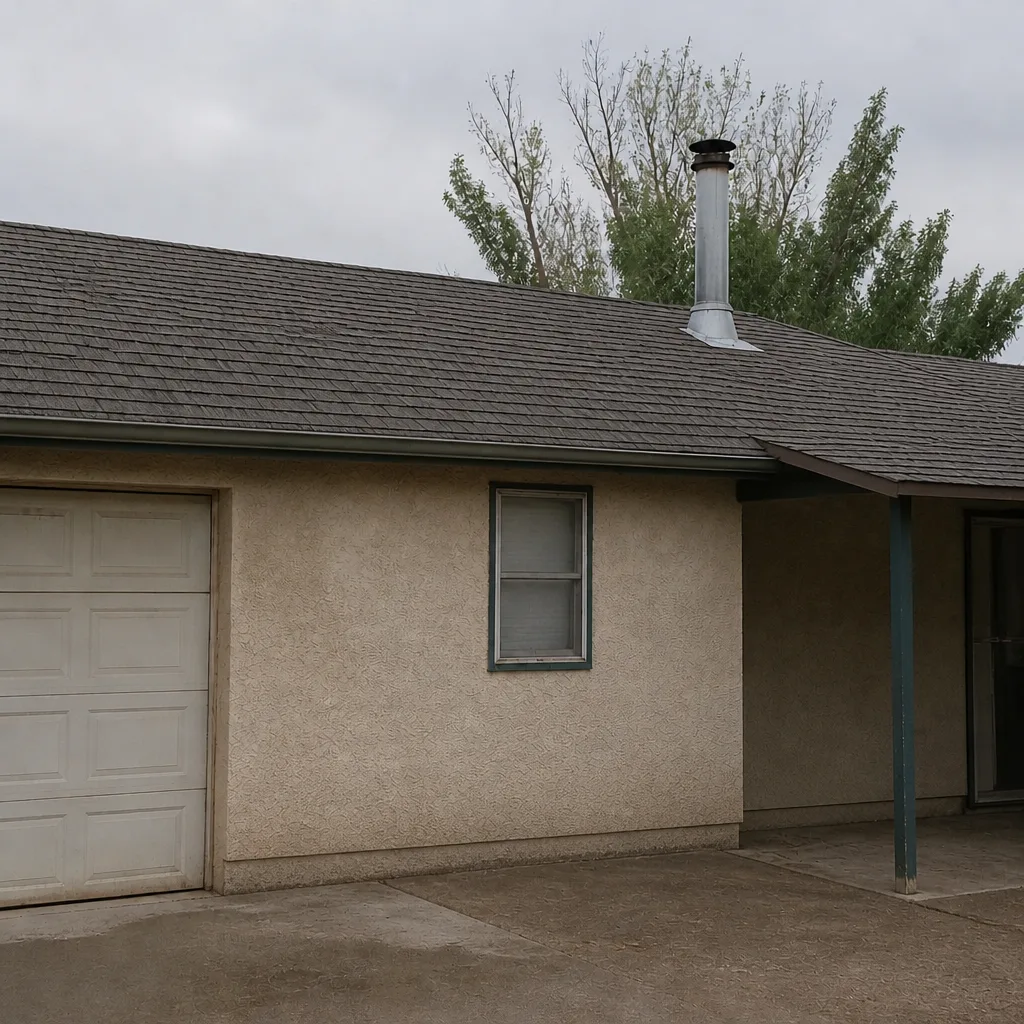
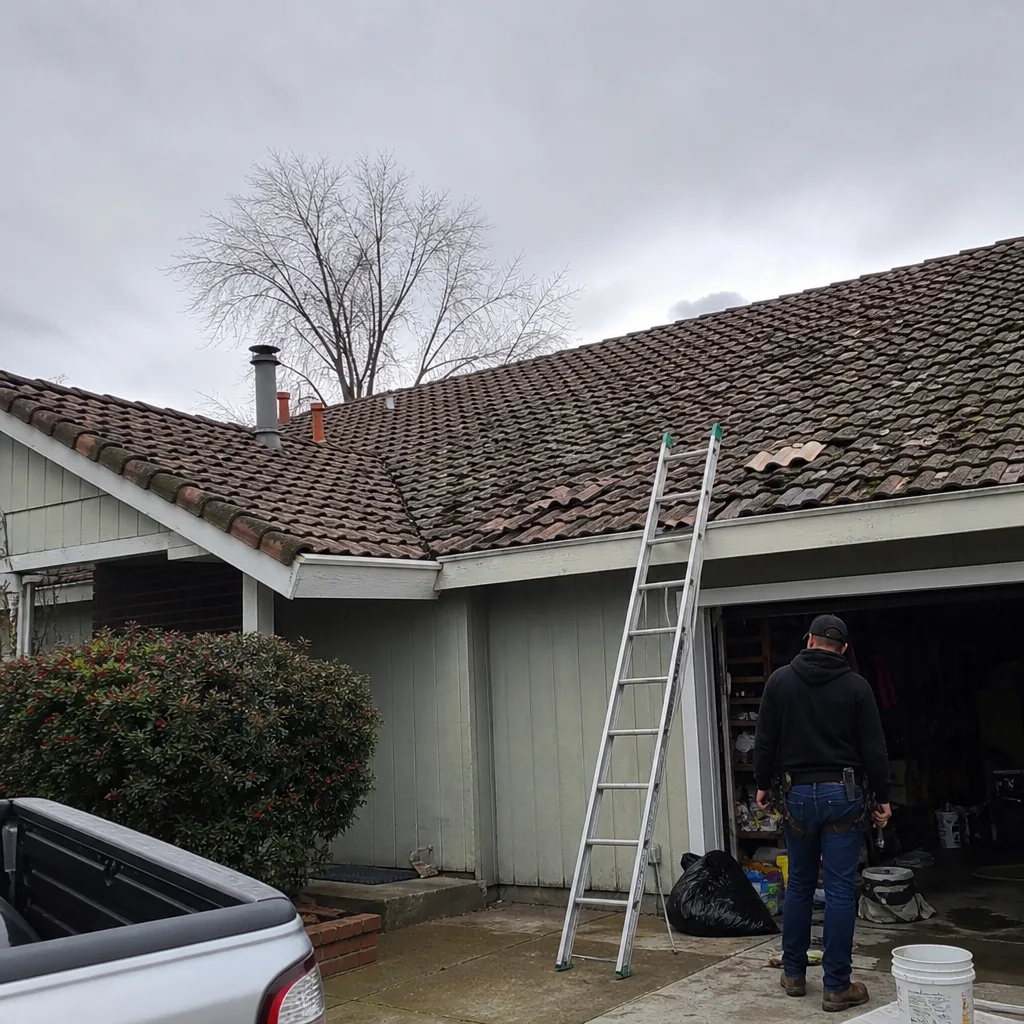
See the difference
 Before
 After
 Before
 After
 Before
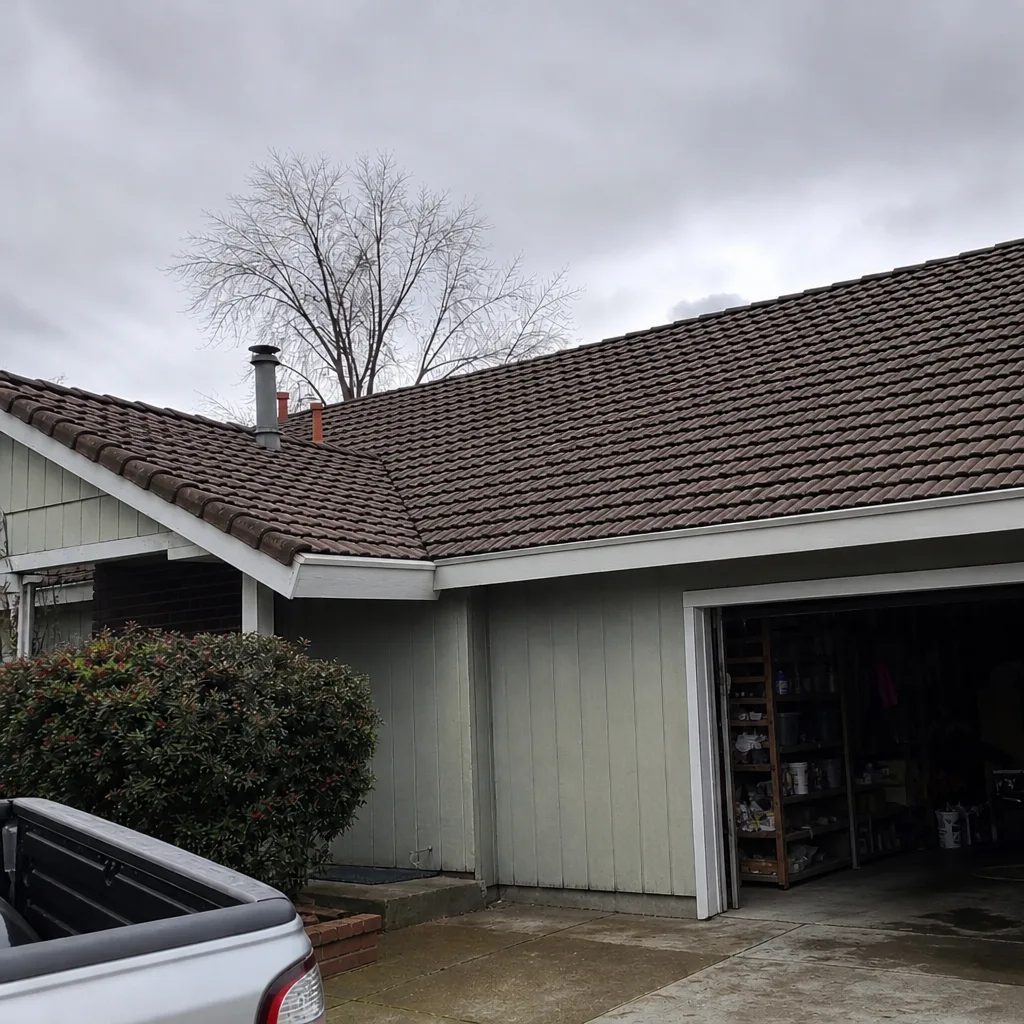 After
When to Call a Professional
Some problems are beyond a homeowner checklist. Call a professional when you see water stains on a ceiling or attic sheathing after rain, when shingles are curling, lifting, or missing across a slope, or when granule loss is clearly concentrated rather than even. Call if the flashing around an HVAC unit or swamp cooler looks cracked or pulled back, if the roof is showing failure on more than one surface, or if you’re simply not confident reading condition from the ground. A full roof walk for inspection is always professional work, given the height and the heat. Roofing Whitney offers free estimates in Whitney. Call (844) 320-5203.
Frequently Asked Questions
Twice a year, timed to the desert calendar rather than the standard spring-and-fall advice. Schedule one check before summer heat peaks and one before the July-to-September monsoon, then add a post-summer read for heat damage once the rains end. Call (844) 320-5203 for an exact quote – estimates are free.
Cost depends entirely on what’s found and is set per job by a written estimate. There’s no single number that fits every roof, which is why an inspection that looks at your actual surface is worth more than a phone quote. Call (844) 320-5203 to schedule an assessment – estimates are free.
Yes, it’s the most common leak point on Whitney rooftops. HVAC units and swamp coolers vibrate and bake under the sun, and the sealant at their base loosens over time. That opening is exactly where water enters during a storm. Call (844) 320-5203 and we’ll check every penetration before it becomes an interior repair.
Light granule shedding at downspouts and in valleys is normal and expected over a roof’s life. Bare patches where asphalt shows through, or heavy accumulation washing off at once, point to early failure and are worth a closer look. Call (844) 320-5203 to find out whether you’re seeing normal wear or a failing surface.
We don’t recommend it for anything above a ground-level observation. Resealing and surface repairs need to be done correctly to hold, and improper work can affect material warranty coverage. The safety risk on a steep, hot roof is real. Call (844) 320-5203 to have the work done properly.
No, not on our work. The written estimate sets the final price, so the number you agree to is the number you pay. That’s true whether the job is a targeted repair or a full replacement. Call (844) 320-5203 for a free written quote.
The Bottom Line
Maintenance on a desert roof works when it’s timed to the threats that actually arrive. Check UV protection and sealant before the summer heat peaks. Clear drains, gutters, and scuppers before the July-to-September monsoon. Inspect for heat damage and granule loss once the rains end. Those three visits, done consistently, are what separate a roof that ages slowly from one that fails early. Pair the schedule with a readiness to call a professional for anything involving the roof surface itself, and keep an honest log of what you find each time. The roof is your home’s primary defense layer, and a few well-timed checks protect it far more than an occasional emergency repair. For a proper assessment in Whitney, call Roofing Whitney at (844) 320-5203 to schedule your free estimate. We answer 24/7. Fast dispatch from 7am to 7pm, Sunday through Friday.
Written by the team at Roofing Whitney.